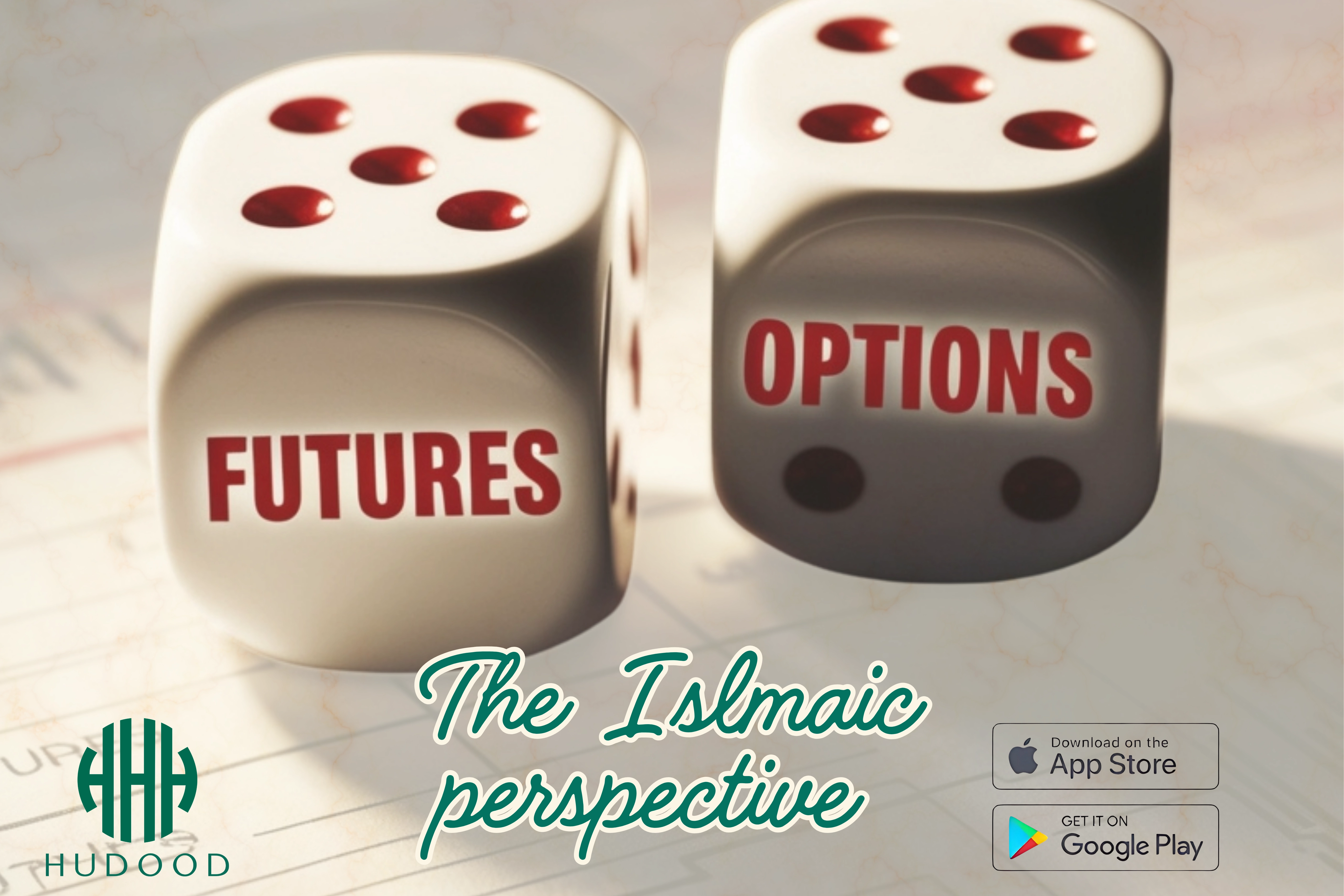
More and more Muslims are investing in the stock market and global markets, and a number of them wonder: "Are futures and options halal or haram in Islam?"
Futures and options are types of derivatives — financial products used extensively in traditional markets for hedging and speculation. Though they have a significant impact on contemporary finance, Islamic scholars have all along held the view that futures and options trading is haram. To know why, let's first dissect what these products are and how they operate.
What Are Futures in Plain Terms?
A futures contract is a promise to purchase or sell something for a set price at some point in the future.
Suppose you're a farmer concerned that the price of wheat will go down before your harvest. To avoid losing out, you make a futures contract:
You promise to sell 1,000 bushels of wheat to a purchaser at today's price, though delivery will not occur three months later.
If the market prices go down, you're protected, because you're still protected at today's higher price.
If prices increase, you miss out on a chance to make more profit because you're bound by the contract.
In brief, futures contracts serve to precommit prices. But in money markets, they are typically exchanged not by firms or farmers, but by speculators who gamble on price fluctuations — and that is where Islamic complaints enter.
What Are Options in Simple Terms?
A call option is an option contract that allows you to buy or sell something at a predetermined price within a specified time frame.
Let's say you want to purchase a new smartphone at ₹500 but are not sure if the price will drop or rise prior to accumulating sufficient savings. You opt to purchase a call option:
You pay ₹50 for the option, which gives you the right to purchase the phone at ₹500 any time within the next three months.
If the price goes up to ₹600, you may purchase it for ₹500 and save ₹100.
If the price drops or remains unchanged, you don't have to purchase it — but you lose the ₹50 you invested in the option.
Options allow investors flexibility to make money from price fluctuations while capping losses. But in the stock market, few options are employed for real purposes such as purchasing a telephone or hedging crops — they are traded for speculations.
Is Futures and Options Trading Halal or Haram in Islam?
The ruling is extremely straightforward among the majority of scholars: options and futures are both haram. Why exactly are derivatives haram in Islam? Let's explore the primary reasons.
1. Use of Riba (Interest)
2. Gharar (Excessive Uncertainty)
In traditional markets, derivatives usually include margin accounts, premiums, or interest-related financing charges. Futures contracts might necessitate interest charges for margins, and option contracts include premiums without the exchange of real assets in the underlying. Because Islam forbids any growth on money-for-money transactions, this goes against the prohibition on riba.
2. Gharar (Excessive Uncertainty)
Both options and futures both have contracts that are based on uncertain future events. For instance, you agree to purchase or sell something in the future without a clue about whether prices would go up or down. This undue uncertainty renders the contract void under Shariah.
3. Maysir (Gambling)
Derivatives are mainly employed not to hedge but to speculate — to gamble on price movements without any genuine desire to purchase or sell the underlying instrument. This reduces financial trading to an exercise in gambling, something Islam prohibits unequivocally.
4. Lack of Real Economic Activity
Trade in Islam is favored when it is conducted with real goods, services, and productive work. Futures and options usually deal with only paper contracts with no physical transfer of goods or ownership, which conflicts with the Islamic conception of trade on tangible value.
Which Islamic Scholars Declare Futures and Options Haram?
If you’re wondering: “Which scholar says options trading is haram in Islam?” — the answer is that the vast majority of Islamic scholars and fatwa councils prohibit it.
Mufti Taqi Usmani, a leading authority in Islamic finance, has explicitly declared both futures and options trading as impermissible due to riba, gharar, and speculation.
Sheikh Yusuf al-Qaradawi also strongly condemns speculative derivatives, calling them gambling-like and harmful to financial ethics.
AAOIFI (Accounting and Auditing Organization for Islamic Financial Institutions), which establishes worldwide Shariah standards, has also made rulings that deem conventional futures and options as haram.
Why Does Islam Prohibit Derivatives?
The short answer is: because they are against the sense of just and open trade in Islam. Rather than producing actual economic value, they produce fictional bets on uncertain things, sometimes on the back of others. Islam promotes trade, investment, and risk, but only as long as they are attached to real assets and actual ownership.
So if you are asking: "Is options trading halal in Islam?" or "Is futures trading halal?" — the scholarly consensus is that they are haram because they involve riba, gharar, and maysir.
Halal Alternatives to Futures and Options
To Muslim investors who wish to hedge risk without using haram instruments, there are halal alternatives:
Islamic forward contracts (for real trade, with actual delivery of commodities).
Sukuk (Islamic bonds) and other asset-backed products.
Takaful (Islamic insurance) for risk management.
Shariah-compliant mutual funds for diversification in investments.
They are based on real assets and Shariah concepts, as opposed to derivatives which are constructed on speculation.
Conclusion: Futures and Options in Islamic Finance
Futures and options can be big in traditional finance but haram according to Islam because they are based on interest, uncertainty, and gambling-like speculation. Even though they are portrayed as risk management tools, they tend to generate more risk, instability, and injustice in reality.
As Muslim investors, the best way is to steer clear of derivatives and instead invest in halal instruments backed by real assets, clear contracts, and good practices.
At Hudood Fintech, our vision is to lead Muslim investors away from haram instruments such as futures and options and towards Shariah-compliant investing that creates wealth with barakah (blessing).